

South Africa Wildlife Expedition
"Dinokeng & Beyond"
7 days / 6 nights
South Africa is where MaiaWildlife is rooted — and one of the finest places on earth to photograph wildlife. In a single reserve you can work the full range: the Big Five (lion, leopard, elephant, buffalo and rhino) up close, predators on the hunt, and the light that makes southern African photography what it is.
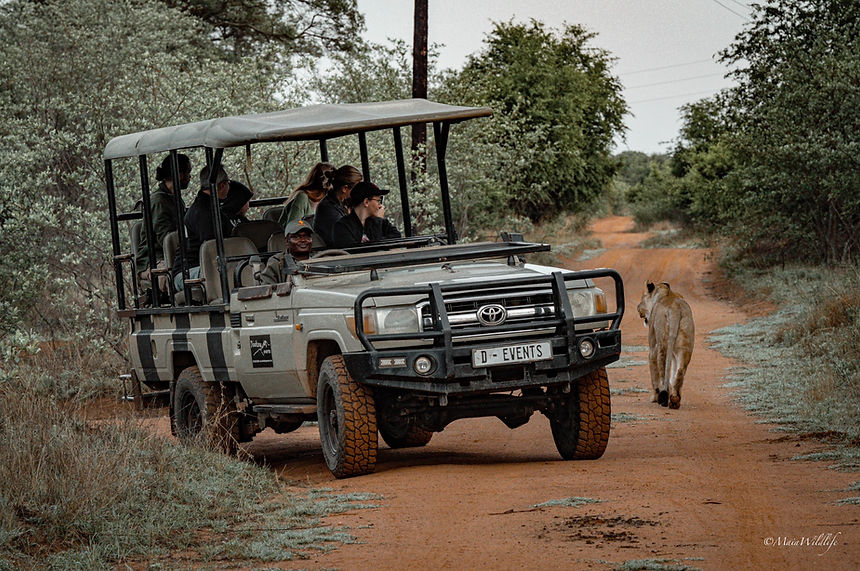
Our photographic safaris are built around the camera. We travel in vehicles set up for shooting, and because I read animal behaviour for a living, we position for the shot before it happens — anticipating the moment rather than chasing it. Small groups mean you get the angle and the time, not a scramble across six vehicles at a sighting.
But South Africa is also where our conservation work is real, not theoretical. At Dinokeng Game Reserve, our guests have worked beside the rangers on genuine operations — fitting tracking collars on lions and elephants, freeing a buffalo from a poacher’s snare, helping relocate a cheetah.
You don’t just photograph the wildlife here. You take part in protecting it.
That’s what a South African expedition with us looks like: serious photography, real wild, and the rare chance to come home with images and a hand in keeping the animals in them alive.
Getting There & Where You’ll Stay
Our meeting point is O.R. Tambo International Airport in Johannesburg. On arrival, an official driver from Dinokeng Events will be waiting in the arrivals area to assist with your transfer.
From the airport, it’s roughly an hour by road to Dinokeng Game Reserve, where your guide will be expecting you — and where your safari begins.
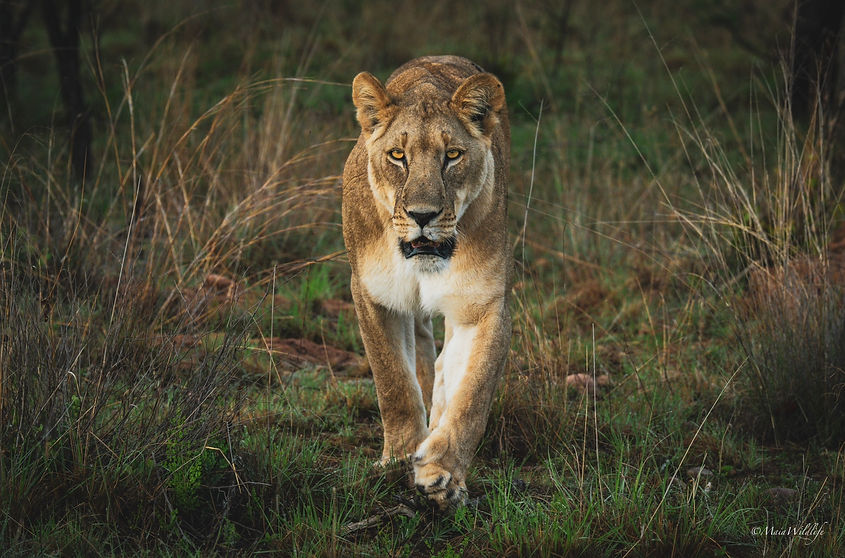
Dinokeng is the largest wildlife sanctuary in Gauteng, set in a malaria-free region, which makes it a comfortable and safe place to be on safari. Covering around 26,000 hectares, the reserve is home to the Big Five — lion, elephant, buffalo, leopard and rhino — all roaming freely across the protected landscape.
It’s also a conservation-focused reserve, built on a model where eco-tourism supports local development and protection of wildlife. Through sustainable tourism, Dinokeng helps create long-term employment and opportunity for the surrounding rural communities. And this is conservation we’re part of, not just guests of: here, our travellers have worked alongside the reserve team on real operations — collaring lions and elephants, removing a snare from a buffalo, relocating a cheetah.
The name Dinokeng comes from the languages of the baTswana and baPedi people and means “place of rivers” — given for the many rivers and watercourses that run through the area before joining the Limpopo and the Orange.
You’ll stay at Tendeni Private Lodge, one of the newest 4-star lodges in the reserve. Its open-plan units are each furnished with a king-size bed or twin singles and a ceiling fan, with a private indoor bathroom — toilet, shower and bathtub.
At the heart of the lodge is a welcoming lapa, where guests gather to relax: a lounge, fully equipped kitchen, dining area and bar. Outside there’s a traditional braai and a swimming pool for the hours between safari activities.
Before You Travel
Travel Information for South Africa:
A little preparation makes for a smoother trip. Below are the main travel requirements, health recommendations, and documents to be aware of before you leave. Please treat this as general guidance only — regulations change, and you should always confirm the current rules with the South African Department of Home Affairs and the embassy or consulate for your nationality before you travel.
Passports & visas:
All visitors need a valid passport.
Many nationalities — including most European countries and the UK — do not require a visa for tourist stays of up to 90 days. If your nationality does require a visa, apply through your nearest South African embassy or consulate before departure.
Immigration may also ask to see: a return or onward ticket; proof of sufficient funds; and your accommodation or itinerary details.
Health & vaccinations:
South Africa requires no mandatory vaccinations for most travellers. However, a Yellow Fever certificate is required if you are arriving from — or transiting through — a country where yellow fever is present; the vaccine must be given at least 10 days before arrival.
It’s wise to make sure your routine vaccinations are current. Commonly recommended: tetanus and diphtheria, hepatitis A, typhoid. For remote or rural travel, hepatitis B or rabies may be worth discussing with your doctor.
Malaria:
Some areas in the far northeast and around Kruger are malaria-risk zones — if you’re visiting those, speak to a travel clinic about prevention. Our safaris in Gauteng, including Dinokeng, are in a malaria-free area, one less thing to worry about, and a real advantage for families.
Travel insurance covering medical care and emergency evacuation is strongly recommended for everyone.
Travelling with children:
South Africa has specific rules for travellers under 18, and these are stricter than in many countries — so please confirm the current requirements well before you travel, as they have changed several times in recent years.
As a general guide [confirm current rules]: a child travelling with both parents usually needs only a valid passport; travelling with one parent may require a consent letter or affidavit from the other; and an unaccompanied minor may need parental consent plus details of who is receiving them in South Africa. These rules exist to protect minors and help prevent child trafficking.
Before you go — a quick checklist:
• Check your passport validity
• Verify visa requirements for your nationality
• Review recommended vaccinations
• Arrange travel insurance with medical and evacuation cover
Regulations can change at any time, so always confirm the latest information with the relevant authorities or your nearest South African embassy before departure. With a little preparation, you’ll arrive ready for the wildlife and the safari ahead.
Electricity and Power Plugs
South Africa runs on 230V at 50Hz, using plug types C, M and N — with the large three-round-pin Type M being the most common. These don’t match European, UK, US or Australian plugs, so everyone will need a travel adapter. Bring at least one; a multi-socket adapter or a small power strip behind a single adapter is ideal if you’re charging cameras, phones and laptops at once.
If you’re travelling from Europe, the UK, Australia or most of Asia, your devices already run on 230V — you only need the plug adapter, not a voltage converter. If you’re coming from the US, Canada or Japan (110–120V), check the label on each charger: most modern camera, phone and laptop chargers read “100–240V” and are fine with just an adapter, but any single-voltage device will need a converter.
One local note: power cuts can happen in South Africa. Our lodges are equipped for it, but a portable power bank is worth packing — especially for long days in the field when you’ll want every battery charged.


Travel Insurance and Medical Services
Comprehensive travel insurance isn’t optional on a trip like this — it’s essential, and we ask that every guest travels with it.
A standard policy often isn’t enough. Most are written for trips spent within easy reach of hospitals and airports, which is rarely the case on safari. Look for a policy that specifically covers emergency medical evacuation — the single most important element for remote travel — with cover of at least USD 250,000 per person (many specialist safari policies offer 500,000 or more). Check, too, that it covers guided activities like game drives and bush walks; some policies exclude these as “adventure activities,” so confirm before you buy.
Your plan should also include medical expenses, trip cancellation and interruption, and cover for baggage and equipment — worth noting if you’re travelling with camera gear.
A practical point on payment: South African private hospitals — which offer excellent care — generally expect payment up front, and most foreign health plans (including US insurance and Medicare) aren’t accepted directly. Good travel insurance is what bridges that gap, so keep your policy details and emergency assistance number with you throughout the trip.
The reassuring side: South Africa has well-equipped private hospitals and clinics, particularly around Johannesburg — close to Dinokeng — so quality care is never far from where we operate.
What to Pack
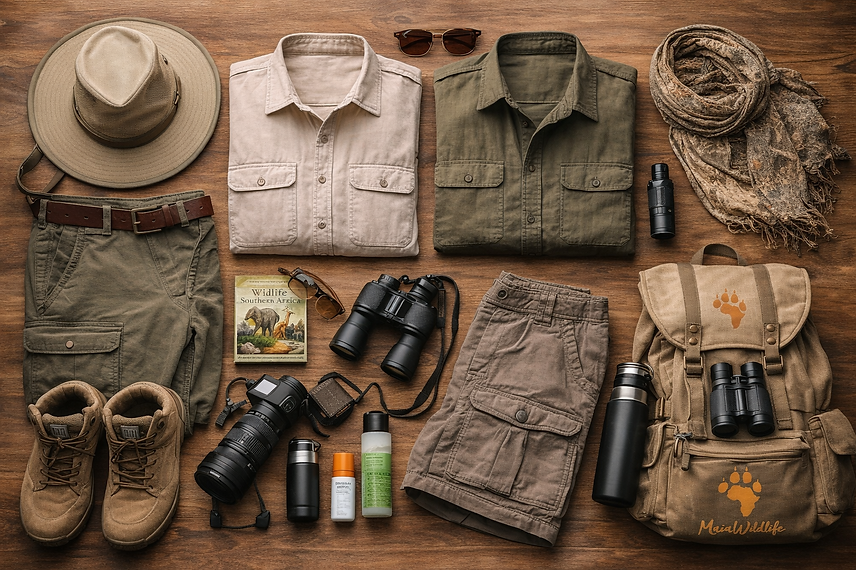
Dressing well for safari is partly about comfort and partly about not announcing yourself to the wildlife. The aim is practical, neutral, and ready for big swings in temperature across a single day.
Natural, neutral colours:
Colours matter in the bush. Animals are far less disturbed by neutral tones that blend with the landscape. Stick to khaki, olive, beige, brown and soft earth tones. Avoid bright colours — red, yellow, white, fluorescents — which stand out and can unsettle animals during close encounters.
Layers, not bulk:
Drives start at first light and run into the cool of the evening, and temperatures swing widely in between. Layering is the answer. Bring lightweight long-sleeve shirts, long trousers (and shorts for the heat of the day), and a fleece or warm jacket for early mornings — on winter mornings in the highveld, dawn drives can be close to freezing, so don’t underpack the warm layer. Long sleeves and trousers also shield you from sun, dust and insects.
Footwear:
Closed shoes for all safari activities — light hiking shoes, walking shoes or safari boots all work. Keep sandals for around the lodge, not for drives or bush walks.
Sun protection:
The sun here is strong, even in winter. Pack a wide-brimmed hat, UV sunglasses, high-factor sunscreen, and a light buff or scarf for sun and dust.
For photographers — the real essentials:
Clothing aside, the bush is hard on gear. Game drives kick up fine dust, so bring a dust-proof bag and a cleaning cloth, and change lenses as little as possible in the open. Pack more batteries and memory cards than you think you’ll need — cold mornings drain batteries fast, and you’ll shoot more than you expect. Charge everything overnight, and a power bank is worth having in case of an outage. A bean bag is handy for steadying a long lens against the vehicle.
Evenings at the lodge:
Evenings are relaxed and informal — casual, comfortable clothing is fine for dinner and time around the fire. Bring a sweater or jacket, as it cools quickly after sunset, especially in winter.
From Dawn to Firelight
Each day balances time in the reserve with moments to rest, explore, and take it all in. Here’s how a typical day unfolds.
We start early, when the bush is at its most active. Shortly after sunrise we head out for the first game drive in Dinokeng, usually two and a half to three hours, time enough to find a good range of wildlife going about their morning — including the Big Five: lion, elephant, buffalo, leopard and rhino.
Back at Tendeni Private Lodge, a relaxed breakfast is waiting.
Later in the morning, depending on the day’s plan, you might join one of several optional excursions beyond the reserve — chosen to add something to the trip: the region’s culture, history and natural heritage. All sit within less than two hours’ drive of Dinokeng, so they fold easily into the day. Or you can simply stay put: a swim, the shade of the communal areas, time to go through the morning’s photographs with the bush around you.
A light lunch is served around 14:00, either at the lodge or out at the activity, depending on where the day takes us.
In the afternoon we head out again, usually around 16:00, for the second drive. Another two and a half to three hours, this time into the best light of the day, as the landscape warms to gold and the predators stir again with the cooling air.
Dinner is around 20:00 — African-inspired dishes in an easy, welcoming setting. Afterwards the evening stays informal: a drink at the bar, the day’s sightings retold, the sounds of the African night.
Schedules shift with the weather, the wildlife, and the day’s plans — flexibility is part of how safari works, and often it’s what leads to the best moments of all.
Optional Activities:
Rory Hensman Conservation & Research Unit:
As numbers of elephants have decreased by some 350% in the last 70 years and by 110 000 elephants in the last ten years (Great Elephant Census) due to poaching and habitat loss, we are honoured to have saved a few. We are even more thrilled to be able to connect you with Elephants through our unique interactions, so that you might see them for what they are, and therefore think a little bit more about their future, and indeed many other species, in an ever changing and modernising Africa.
Head out with the herd after the interaction to spend a little more time getting to know them a lot better! Here you’ll see the wild side of the elephants as they free-range feed, frolic, drink, dustbathe and enjoy the 300-hectare wildlife reserve they call home!
Rhino Connect - United for Rhino Survival:
Founded in 2016, by Tersia Jooste, Rhino Connect is an organization dedicated to the conservation and protection of rhinos. Our mission extends beyond preservation efforts; we actively engage in wildlife protection initiatives and strive to increase public awareness about the challenges facing these majestic creatures.
By collaborating with local communities, dedicated conservationists, and wildlife professionals, Rhino Connect plays a crucial role in ensuring the survival and well-being of rhinos in their natural habitats.
AirVentures - Hot Air Ballooning:
Exclusive Hot Air Ballooning Safaris over the Cradle of Humankind, South Africa.
AirVentures Hot Air Ballooning offers more than just a hot air balloon ride, we offer a total experience encompassing all the good things that make Africa great, from sun rise to great food, from wildlife to breathtaking scenery.
AirVentures can meet all your requirements with a choice of high quality, exciting flight packages. Our attention to detail, and focus on exceptional service will ensure that your balloon flight with us meets all expectations.
Named after King Moshoeshoe’s inspired words, “Our culture is the light of our nation”, Lesedi Cultural Village transports guests on an illuminating and enthralling cultural adventure.
Visitors to Lesedi Cultural Village are immersed in a cultural tradition tour de force that connects the past with the present and shines a light on our collective humanity. The guest experience is enhanced by the beautifully African-designed guest rooms and suites that provide every modern comfort and local Ubuntu.
Welcome to Lesedi. Welcome to the Light.
Pricing and Terms
The South African Expedition costs:
€2,500 per adult
€1,600 per child (up to 15 years)
Based on shared accommodation.
Included
• Airport transfers
• Accommodation at Tendeni Private Lodge
• All meals, and drinks
• Daily sunrise and sunset safaris (Sunday to Saturday)
• Private safari guide
• Park fees
Not included
• International flights
• Optional activities and excursions
• Travel insurance (required — see our insurance section)
• Personal medical expenses (covered by your travel insurance)
• Items of a personal nature and gratuities
Booking & payment
A 30% non-refundable deposit confirms your reservation. The balance is due no later than 60 days before departure. For bookings made within 60 days of departure, full payment is required at the time of booking.
MaiaWildlife reserves the right to cancel any reservation that doesn’t meet these payment terms.
Group size
Places are limited to 9 guests.
Early booking is strongly recommended.

Your Packing Checklist
A quick list to run through before you zip the bag. The sections above explain the why; this is simply what to tick off.
Travel documents:
• Valid passport (correct validity and blank pages)
• Flight tickets and itinerary
• Travel insurance documents
• Visa, if required for your nationality
• Copies of key documents (digital and printed)
Clothing:
• Neutral colours (khaki, olive, beige, brown)
• Lightweight long-sleeve shirts
• Comfortable long trousers
• Light jacket or fleece for early drives
• Sun hat
• Comfortable walking shoes or light hiking boots
• Casual clothing for evenings at the lodge
• Swimwear for the pool
Sun & weather:
• UV sunglasses
• High-factor sunscreen
• Lip balm with SPF
• Light scarf or buff for sun and dust
Health & personal care:
• Personal medications
• Basic first-aid kit
• Insect repellent
• Hand sanitiser / wipes
• Toiletries
Photography & electronics:
• Camera and lenses
• Extra memory cards
• Spare batteries
• Charger
• Binoculars
• Power bank
• Plug adapter for South African sockets (Type M is most common)
Optional but recommended:
• Small daypack for excursions
• Notebook or journal
• Reusable water bottle
• Lightweight rain jacket (seasonal)
• Torch or headlamp

