

Botswana Wildlife Expedition
"Okavango & Beyond"
9 days / 8 nights
The MaiaWildlife Botswana Expedition takes you deep into some of Africa’s last great wild places — across the floodplains of the Okavango, ancient river systems, and predator-rich savannas, by vehicle, by boat, and by mokoro, the traditional dugout canoe.
This is not mass tourism.
This is a curated expedition.
• Small groups
• Experienced guiding and photographic support
• Carefully chosen camps and lodges
• A real focus on conservation and ethical wildlife encounters
Every day is built to put you in the right place at the right moment — and to connect you to the landscape, not just pass through it.
Who it’s for
Photographers. Wildlife lovers. Travellers who want to understand what they’re seeing, not just tick it off.
Botswana gives you space, silence and sheer intensity all at once. Over nine days you’ll see the wild at close range — gliding through Delta channels at water level, tracking elephant in the dry-season heat — and come home with more than photographs. You come home with perspective.
Step into the wild, properly.
Where are we going ?
Chobe National Park:
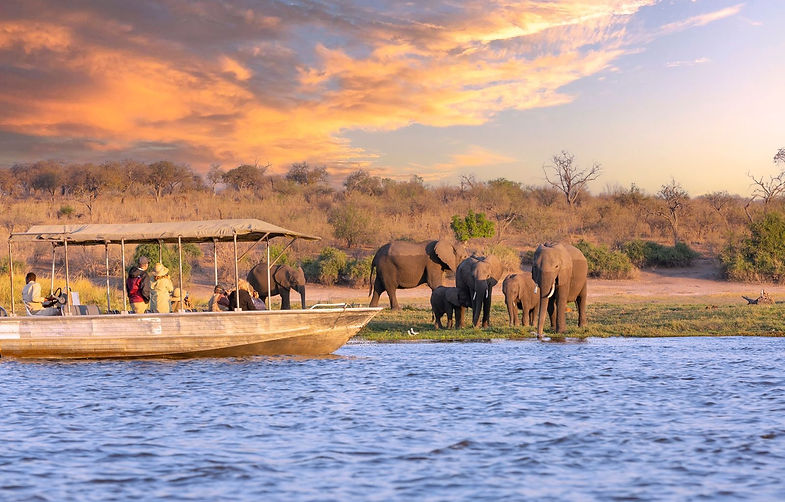
Our journey begins in Chobe, home to one of the largest concentrations of elephants on Earth. Here the Chobe River becomes the stage. Elephant herds crossing at sunset. Lions moving along the banks. Hippos and crocodiles setting the rhythm of the water. Game drives and river cruises let us read the same ecosystem from two angles — land and water.
Savuti:
We move south into Savuti, one of Africa’s most legendary predator grounds. Open plains, dramatic skies, and the unpredictable Savuti Channel make the setting for raw wildlife encounters. This is lion country — big prides, spotted hyenas, and the constant tension between hunter and hunted. Wild, remote, beautifully untamed.
Khwai Community Area:
In Khwai, wildlife and community share the same ground. The game viewing is outstanding, often with fewer vehicles and a strong conservation-driven approach. Leopard, wild dog and large herds of antelope are frequently seen — and night drives open a different world, when the nocturnal species take over.
Okavango Delta:
The expedition culminates in the Okavango Delta — a UNESCO World Heritage Site and one of the most remarkable ecosystems on the planet. Here, water defines everything. We move through channels and islands shaped by the annual flood, where elephants feed in the shallows and red lechwe pick their way through the reeds. Depending on conditions, we may explore by traditional mokoro, on foot, or by classic game drive across the mosaic of habitats.

Travel Information
Travelling to Botswana is straightforward and safe, and a little preparation goes a long way. Here’s what to know before you go.
Visa & entry requirements:
Many nationalities don’t need a visa for short tourist stays in Botswana; others can obtain one on arrival or apply in advance. Requirements change, so always check with your nearest Botswana embassy or the official government website before departing.
Your passport must be valid for at least six months beyond your travel dates, with several blank pages for entry stamps. If your trip combines Botswana with neighbouring countries such as South Africa, Namibia or Zimbabwe, verify the entry rules for each.
Health & malaria:
Parts of northern Botswana — including the Okavango Delta and Chobe National Park — are malaria areas, particularly during and after the rainy season. We strongly advise consulting a travel doctor well in advance to discuss:
• Malaria prophylaxis
• Routine vaccinations
• Travel insurance with medical cover
Preventive measures are simple and effective: use insect repellent, wear long sleeves in the evenings, and sleep under mosquito nets where provided.
Vaccinations:
Review your vaccination status with a travel doctor or health clinic, ideally four to eight weeks before departure. Make sure your routine vaccinations are current — typically tetanus, diphtheria, polio, and measles, mumps and rubella.
Depending on your medical history and plans, a doctor may also recommend hepatitis A, hepatitis B and typhoid, which are commonly advised for travel in parts of southern Africa.
Botswana is not a yellow fever country. However, proof of yellow fever vaccination may be required if you’re arriving from, or transiting through, a country where yellow fever is present. Always confirm current regulations before you travel.
When to travel:
Botswana is a year-round safari destination.
The dry season (May to October) brings cooler temperatures, little rain, and excellent wildlife concentrations around water sources. The green season (November to March) brings dramatic skies, newborn animals and exceptional birdlife, with lush landscapes and superb photography conditions.
Each season offers something different — there’s no wrong time, only different perspectives.
Travelling with children:
Travelling to Botswana with children is absolutely possible and makes for a wonderful family trip. That said, southern Africa has specific entry rules for minors, designed to protect children and prevent trafficking, so proper documentation matters.
Passports — Every child needs their own valid passport, valid for at least six months beyond the travel dates and with enough blank pages for stamps. Children cannot travel on a parent’s passport.
Visas — Visa rules for children generally follow the same nationality-based requirements as for adults. Always confirm the latest rules with the nearest Botswana embassy or official source before departure.
Travelling with both parents — Usually only valid passports are required, though airlines may occasionally ask for proof of relationship, so carrying a copy of the child’s birth certificate is recommended.
Travelling with one parent — Immigration authorities may require:
• A certified copy of the child’s full birth certificate showing both parents’ details
• A written consent letter from the non-travelling parent
• A copy of the non-travelling parent’s passport or ID
These should be in English, or accompanied by a certified translation.
Travelling with a guardian or without parents — If a minor travels with grandparents, relatives or another guardian, additional documentation is usually needed:
• Certified birth certificate
• Written consent from both parents
• Copies of both parents’ identification
• Contact details for parents and guardian
Requirements can vary with routing and airline policy, especially when connecting through countries such as South Africa, which has particularly strict rules for minors.
Health for children — Children should meet the same requirements as adults, including routine vaccinations and, where relevant, malaria precautions for the northern safari areas. Consult a paediatrician or travel clinic well in advance to ensure everything is appropriate for the child’s age.
Lodge & safari policies — Many camps in the Okavango Delta and Chobe have minimum age requirements, particularly for walking safaris and mokoro excursions. A private vehicle is often recommended for families, for flexibility, safety and comfort.
Currency and Practical Information
The local currency is the Botswana Pula (BWP). As a rough guide, 100 BWP is around €6.50 / $7.50, though exchange rates vary. US dollars are widely accepted in safari camps and lodges, and credit cards are commonly used in tourism establishments.
Electricity in camps and lodges runs on 230V (50Hz), using plug types D, G and M — type M, the large three-round-pin plug, being the standard. Many camps also provide universal charging stations. Since this is the same main plug type used in South Africa, a single adapter covers both countries if your expedition combines the two. Bring more camera batteries than you think you’ll need — charging can be limited in remote Delta camps, where power may run on generators or solar.


Travel Insurance
Comprehensive travel insurance is essential for this expedition, and we ask that every guest travels with it. Safari areas are remote, often hours from a hospital, so your policy should specifically cover:
• Emergency medical evacuation — the most important element for remote travel; look for cover of at least USD 250,000 per person
• Medical expenses, including treatment at private hospitals
• Trip cancellation and interruption
• Baggage and equipment, worth noting if you’re travelling with camera gear
Check, too, that your policy covers guided safari activities — some exclude game drives, walking safaris or mokoro excursions as “adventure activities,” so confirm before you buy. Keep your policy details and emergency assistance number with you throughout the trip.
What to Pack
A safari in Botswana isn’t about fashion. It’s about comfort, practicality, and not announcing yourself to the wildlife. The right clothing keeps you comfortable through long drives, protects you from sun and insects, and helps you blend into the landscape.
Keep it neutral:
Stick to khaki, beige, olive and soft browns — these work best in the bush. Bright colours draw attention and can disturb wildlife, white shows dust fast, and dark blue and black attract tsetse flies in some regions. Earthy tones are always the safest choice.
Dress in layers:
Days often start cold and end hot. Early mornings in the Okavango or Chobe can be surprisingly fresh, especially between May and August, before the heat builds by midday. Bring a light fleece or jacket for early starts, breathable shirts for the day, and a buff for dust. On water-based mornings, the chill bites harder out on the mokoro — don’t underpack the warm layer.
On the water:
Botswana is as much about water as land. On mokoro and boat outings you can catch spray or the odd splash, so pack something quick-drying and — most importantly — a dry bag or waterproof cover to protect your camera gear. A pair of sandals or shoes that can get wet makes getting in and out easy; keep your closed shoes for drives and walks.
Fabrics:
Lightweight, breathable materials — cotton or technical outdoor fabrics. Long sleeves and trousers are ideal in the evenings, against both mosquitoes and sun. Avoid heavy fabrics; you want airflow and freedom of movement.
Footwear:
Closed, comfortable shoes for all bush activities — lightweight walking or trail shoes for drives, and proper grippy shoes if your itinerary includes walking safaris. Sandals are fine around camp, but not for bush activities.
Sun protection:
The sun is strong year-round. Don’t forget a wide-brimmed hat, UV sunglasses, and high-factor sunscreen.
Evenings at camp:
Most camps and lodges are relaxed and informal — smart casual is more than enough, no formal wear needed.
When you’re dressed right, you stop thinking about your clothes and start paying attention to what you came for.

Tented Camps in Botswana


Itinerary
Day 1 — Arrival: gateway to Botswana
Fly into Kasane Airport (BBK), ten minutes from Chobe, or Maun International, around four hours out. We’ll meet you, sort the transfer and briefing, and head out to the bush.
Days 2–3 — Chobe National Park
Explore Chobe’s riverfront with three game drives and a boat safari, among large herds of elephant, hippos and waterbirds.
Days 4–5 — Savuti
Known for its predators and its ancient San rock art, Savuti has a more rugged, remote feel. Three game drives, including a visit to the rock paintings.
Day 6 — Khwai Community Area
Some of the best predator country of the trip — leopard, lion and wild dog — across Khwai’s open plains and woodlands. Two game drives.
Days 7–8 — Okavango Delta
Explore the winding channels and lagoons by mokoro and safari vehicle, watching for the elusive sitatunga and the rare Pel’s fishing owl.
Day 9 — Departure
Transfer to your airport of choice for onward travel.
Itineraries can be adjusted to your wishes, weather, and wildlife movements.

Pricing & Terms
The Botswana Expedition costs:
€3,500 per adult
€1,750 per child (ages 5–12)
Based on shared accommodation.
Included
• Airport transfers
• Accommodation
• All meals, including tea and coffee
• Safari vehicle with private driver and guide
• National park entrance fees
• Bottled water
• Administrative and tax fees
Not included
• International flights
• Travel insurance (required — see our insurance section)
• Optional activities
• Alcoholic and soft drinks
• Personal medical expenses (covered by your travel insurance)
• Gratuities and items of a personal nature
Booking & payment
A 30% non-refundable deposit confirms your booking. The balance is due no later than 60 days before departure. For bookings made within 60 days of departure, full payment is required at the time of booking.
MaiaWildlife reserves the right to cancel any booking that doesn’t meet these payment terms.
Group size
Places are limited to 9 guests.
Early booking is strongly recommended.
